
Crisp County Court Docket Searches
Know the court class first, then search by name. Crisp Superior Court handles the heavy caseload. Felony prosecutions, divorces, larger civil claims, equity matters, jury trials, and appeals from the lower courts all run there. For a Crisp County court docket search online, the Georgia Courts e-access directory points that court to PeachCourt. You will need an account there. Its public help describes lookups by case number, party name, and filing. It is not a statewide index anyone can browse without signing in.
Collect a few details before you start. Bring the exact case number if one exists. Also note the court or agency that issued it, the date range for the filing or citation, and the shortest party name that identifies the case. Matters in Magistrate, Probate, Juvenile, Cordele Municipal, or Arabi Municipal Court belong with those offices. Do not assume the Superior route will show them.
- Identify the court and record type. A Superior civil pleading, a Magistrate warrant, a Probate estate, and a city citation have different custodians.
- For a Crisp Superior case, open the Georgia Courts e-access directory or PeachCourt, choose Crisp and Superior, then register or sign in.
- Search by exact case number when possible. Use a party name or filing search only when the number is not known, and confirm the county and court in each result.
- Read the docket entry, filing date, setting, and disposition together. A filed charge, motion, or complaint is not the same as a ruling or finding.
- For a certified copy, sealed item, lower-court file, or missing result, contact the office that holds the record and ask for its current request and fee process.
When the portal gives you nothing, go around it. The clerk's counter, a phone call, or a short written request to the right Crisp County office often works better than a login wall. A blank result screen can mean an account gate, a filing delay, a sealed record, an incomplete index, or simply a search aimed at the wrong court.
Crisp County Docket Account Gate
Two official listings back up the PeachCourt route. The Georgia Courts e-access directory names PeachCourt for Crisp Superior. The e-file directory makes PeachCourt mandatory for filings in that court. Neither listing turns every Crisp court into one shared database. The account is a real condition of access. To register, you supply a first and last name, an email and confirmation, a password and confirmation, a secret question and answer, a reCAPTCHA, and agreement to the terms.
That gate also explains why a public case lookup can look thin. PeachCourt's help pages walk through a county and court selector. They cover exact case-number search, party-name search, and filing search. You can open a case docket and save it to My Cases. Document availability varies by court and by document type, though. Sealed material, adoption documents, unexecuted proposed orders, and other excluded categories may carry no public image at all. Treat a provider result as one access view. Never treat it as proof that a filing does not exist.
The PeachCourt registration page lays out each account field. Follow the provider's current search help for the search path. Then confirm any critical date or disposition with the Clerk of Superior and Juvenile Courts.
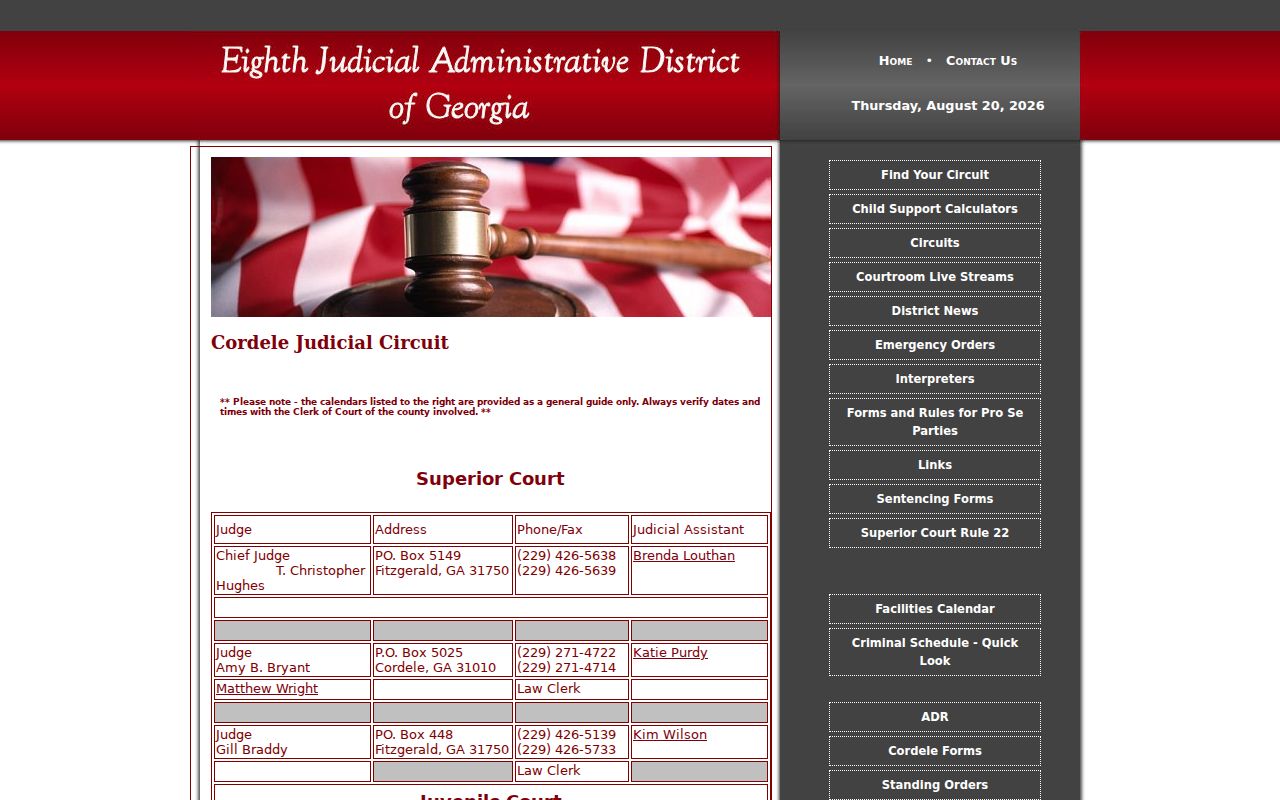
The Cordele Judicial Circuit directory shows the larger circuit context around a Crisp County court docket.
Court Dockets: What They Show
Think of a docket as the timeline underneath a case. Entries may show when a pleading, motion, order, setting, or disposition was recorded. The docket itself is not the full document file behind those entries. PeachCourt's criminal help lists fields a court docket may hold. These include assigned judge, case status, co-defendants, attorneys, charges, disposition and date, calendar events, proceedings, and documents. Coverage varies by court. No single Crisp case should be expected to include every field.
Record the field name and its date together when you take notes. Docket labels run short. The linked order or judgment usually carries the language that controls. Keep the court, case type, and source date beside each entry. That way a later status change is not confused with the earlier court record.
| Case number | Use the exact number shown by the clerk or provider. Research did not verify a universal Crisp format, so do not infer one from another Georgia county. |
|---|---|
| Case type | Note Superior civil, Superior criminal, Magistrate, Probate, Juvenile, municipal, or federal routing before reading the entry. |
| Parties and roles | Record only the public names needed to distinguish the case, along with labels such as plaintiff, defendant, petitioner, or respondent. |
| Filings and orders | Separate a complaint, answer, motion, exhibit, dismissal, judgment, or signed order. Filing an allegation does not prove it. |
| Settings | Capture the date, start time, courtroom or facility label, event type, judge, and whether the item is a scheduled event or a completed entry. |
| Disposition | Read the charge or claim count, disposition label, date, and controlling order together. One case can have different results on different counts. |
A docket entry can reveal the next step in a public case of local interest without opening every underlying paper. For anything personal, the record confirmed by the court or clerk that keeps it is the one to trust.
Crisp County Docket Terms
Docket terms in Crisp County carry different weight than people assume. A status like pending or disposed answers one question, not all of them. These plain meanings keep a docket search anchored to what the record actually says.
- Docket entry
- One recorded filing, event, setting, or order in the case register.
- Disposition
- The recorded resolution or status of a case or charge, such as a judgment, plea, dismissal, or acquittal.
- Continuance
- A postponement or rescheduling of a setting. It does not by itself end the case.
- Nolle prosequi
- A prosecutorial dismissal under Georgia procedure. The actual entry and any later refiling control.
- Sealed or restricted
- Access limited by law, rule, order, or system permission. Restricted does not mean destroyed.
Crisp County Courts and Their Dockets
Crisp County offers several local routes within Georgia's trial-court structure. Superior and Juvenile Courts sit in the Cordele Judicial Circuit. Probate and Magistrate keep their own statutory roles. They also keep their own record custodians. Cordele and Arabi handle municipal matters separately from county and Superior searches. A federal case tied to Crisp County leaves the county clerk system altogether.
| Court or system | Docket covers | First search route |
|---|---|---|
| Crisp Superior Court | Felony trials, broad civil matters, divorce, equity, jury matters, and circuit calendars | PeachCourt or the Clerk of Superior and Juvenile Courts |
| Crisp Magistrate Court | Warrants, preliminary matters, minor criminal cases, civil claims up to $15,000, and dispossessory matters | Magistrate Court, Suite 105, by phone or counter |
| Crisp Probate Court | Estates, wills, guardianships, licenses, and Crisp Sheriff or Georgia State Patrol traffic citations | Probate Court and its published payment route |
| Crisp Juvenile Court | Delinquency, dependency, CHINS, truancy, and related child matters | Juvenile Court or the Clerk, subject to confidentiality rules |
| Cordele Municipal Court | City traffic and local-ordinance matters | Cordele GovernmentWindow or the municipal clerk |
| Arabi Municipal Court | Town traffic and municipal matters | Arabi nCourt citation search or the town clerk |
| Federal court | Federal civil, criminal, and bankruptcy matters | PACER and the Middle District of Georgia, Albany Division |
Georgia Courts' court-class explanation works well as a state-level map. For a specific record, though, the local office's answer governs.
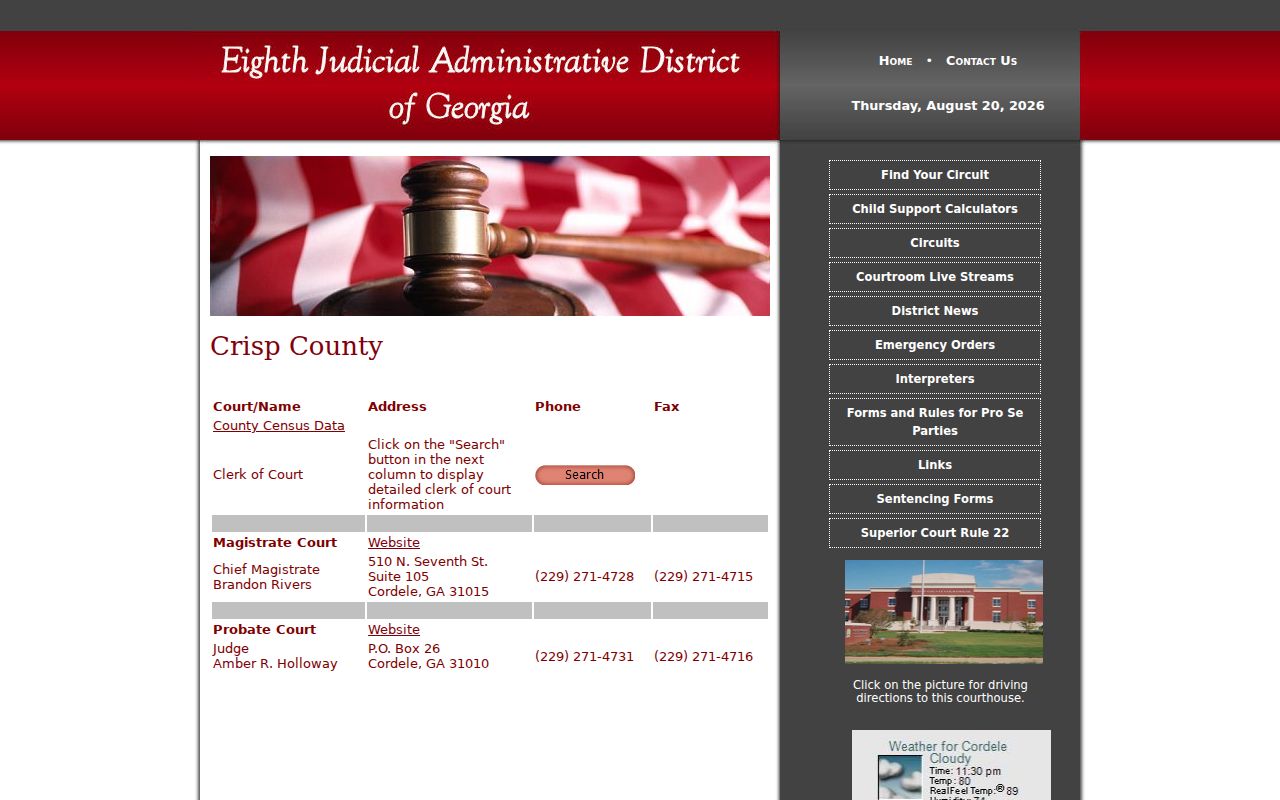
The Eighth District Crisp court page provides a circuit-level starting point for local docket questions.
Crisp County Traffic Routes
Traffic shows exactly why a Crisp County docket search begins with the issuing agency. Georgia Courts reports no centralized traffic-citation database for the state. A citation from the Crisp Sheriff or Georgia State Patrol lands in Probate Court. A Cordele ticket stays with Cordele Municipal Court. An Arabi ticket goes to Arabi Municipal Court. The courts may sit close together on a map. Their clerks and portals do not swap records, though.
| Citation source | Route | Timing detail |
|---|---|---|
| Crisp Sheriff or GSP | Crisp Sheriff instructions, Probate Court, or EZ Court Pay | Probate’s county page says wait ten days before calling or using the online payment route |
| Cordele city | GovernmentWindow or Cordele Municipal Court | Cordele Police says online payment is unavailable after the court date |
| Arabi town | Arabi nCourt or the town clerk | The portal says allow five days and gives letter-suffix and leading-zero tips |
A payment receipt is not a full docket. Ask the court that owns the citation for a court date, a disposition, a motion, or a copy. Keep in mind that the citation, the court record, the DDS report, and the driver-history record are separate records kept by different offices.
Court Dates and Settings in Crisp County
Calendars only get you so far. The Cordele Judicial Circuit posts calendar links but calls them a general guide. So the date and time should always be verified with the clerk of the county involved. A solid setting note names the court, the case number, the event label, the date, the start time, the courtroom or facility, the judge, the source page, and the date checked. That detail is what separates a live setting from a stale notice or a room-use plan.
The accessible 2024 Cordele facilities calendar leans on local labels. Those cover civil and criminal hearings, arraignments, grand jury, trials, juvenile hearings, accountability court, and administrative days. Be careful with look-alikes. The county's public website calendar tracks county commission meetings, not a Crisp court docket. A livestream status for Crisp Courtrooms 1 and 2 helps the public watch proceedings. Even so, it does not prove any particular case is being heard.
When a setting truly matters, follow the full verification sequence on the Crisp County court schedule page. A citation's summons, a later order, or an emergency closure notice can all change what an older calendar shows. So treat any calendar as a starting point only.
Crisp County Calendar Limits
Different calendar sources do different jobs. The Cordele Circuit page points readers toward circuit calendars. It also tells them to confirm dates with the local clerk. The 2024 facilities calendar is useful for decoding terms such as CR1, CR2, JAR, Civil/CS Hear, Crim Hear, DP Motions, JUV, and Acct. Ct. Those labels describe rooms or event classes. They do not prove that a named case sits on a current setting.
Crisp County publishes no 2026 daily Superior calendar. The Juvenile Court posts no public daily docket either. Its Juvenile Court page says court runs most days. Date questions go to the clerk. So call the office that owns the docket when an entry is missing. A guess built from a room schedule or a stream tile is not verification.
The Eighth District livestream page lists Crisp Courtroom 1 and Courtroom 2 and states that viewing does not authorize recording.
Docket Access Under Georgia Law
Georgia starts from a simple principle: records are public. Court rules, statutes, orders, and privacy limits then narrow that access. They apply to the record at issue. The Georgia Open Records Act covers public records. Those are held by qualifying state, county, and municipal custodians. Court files answer to court-specific access rules on top of that. A written request should name the custodian, the record, the date range, the format, and the preferred delivery. Asking an office to build a new analysis instead usually goes nowhere.
Key rules:
O.C.G.A. §§50-18-70 through 50-18-75 establish Georgia’s Open Records Act framework for public records.
O.C.G.A. §50-18-71(d) explains response practice, costs, exemptions, and partial production or redaction.
Uniform Superior Court Rule 21 starts from access to court files unless law, procedure, or a limiting order applies.
Rule 21.6 and O.C.G.A. §9-11-7.1 address protected identifiers and redacted public copies.
When an item is withheld, ask which exemption or rule applies and request any non-exempt part. Changing the subject line of a request does not open a sealed order. Juvenile and adoption records require a lawful access basis, and the public version may show only a restricted entry.
Crisp County Restricted Court Records
A Crisp docket can show that a filing or event exists. Even so, the document behind it may not be open online. Rule 21 supports access subject to a law, procedure, or order. Rule 21.6 covers protected identifiers. PeachCourt's help pages list sealed, adoption, and unexecuted proposed-order material among categories that may be unavailable. The Georgia Attorney General's public-record guidance likewise supports redacting protected information. It backs that over releasing every field of an unredacted file.
Juvenile Court is a separate caution. Crisp Juvenile Court publishes no public adult-style docket. A youth-record request can require a signed release. It may also require parent or guardian steps through the Georgia Department of Juvenile Justice. Record restriction can also change ordinary public visibility without destroying the record itself. Say "not available through the public search" or "restricted from ordinary public access," never "erased."
How the Clerk Keeps Docket Records
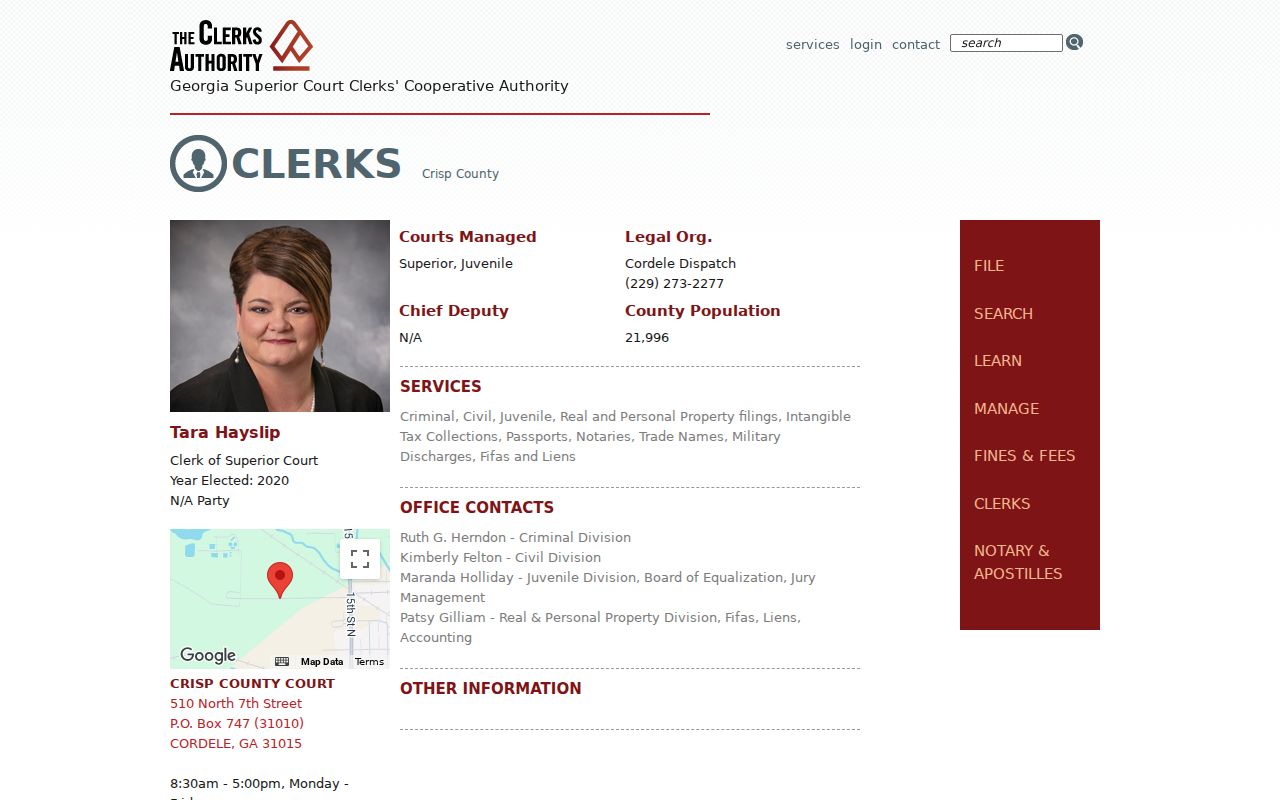
The Clerk of Superior and Juvenile Courts is the central local custodian for Superior filing and docket work. Juvenile access follows its own rules. The office's published scope covers criminal and civil records, juvenile services, real and personal-property filings, jury administration, liens, trade names, military discharges, and related clerk functions. Crisp Superior online access runs through PeachCourt. Even so, the clerk remains the route for certified copies, restricted material, missing records, and questions about what the provider shows.
Ask for the exact product. That could be a public index search, a docket sheet, an ordinary copy, a certified copy, a judgment, an order, a transcript, or a separate agency record. A public web image is not automatically certified. The GSCCCA eCertification portal exists. Crisp participation is not assured, though. So check with the clerk before relying on that route.
Clerk of Superior and Juvenile Courts
510 7th Street North
Cordele, GA 31015
P.O. Box 747, Cordele, GA 31015
229-271-4726
8:30 a.m. to 5 p.m., Monday through Friday
Crisp County Clerk services
A statewide cost schedule offers useful benchmarks: 50 cents per page for an uncertified copy without assistance, $1 per page with assistance, and $2.50 for the first page of a certified or exemplified copy plus additional-page charges. Treat those as benchmarks, not a current Crisp quote. Ask the clerk for the current total and turnaround.
The GSCCCA Crisp clerk record places the local clerk in the state cooperative directory.
Crisp County Court House History
Court records live in a building with its own civic story. Per the Crisp County history source, the county was cut from Dooly County in 1905. Cordele grew from its railroad start. The Georgia Courthouse Manual describes the courthouse as a 1950 modern building. Bernard A. Webb was its architect. A historic county image adds context, not docket evidence.

The FY24 county audit lists lines for Superior Clerk, Magistrate, Probate, Juvenile, District Attorney, public defender, judicial administration, grand jury, and drug court. It shows connected offices, not a docket total. Georgia dashboards report self-reported aggregates. Never mix figures across court classes without matching dates and definitions.
City-by-City Court Dockets in Crisp County
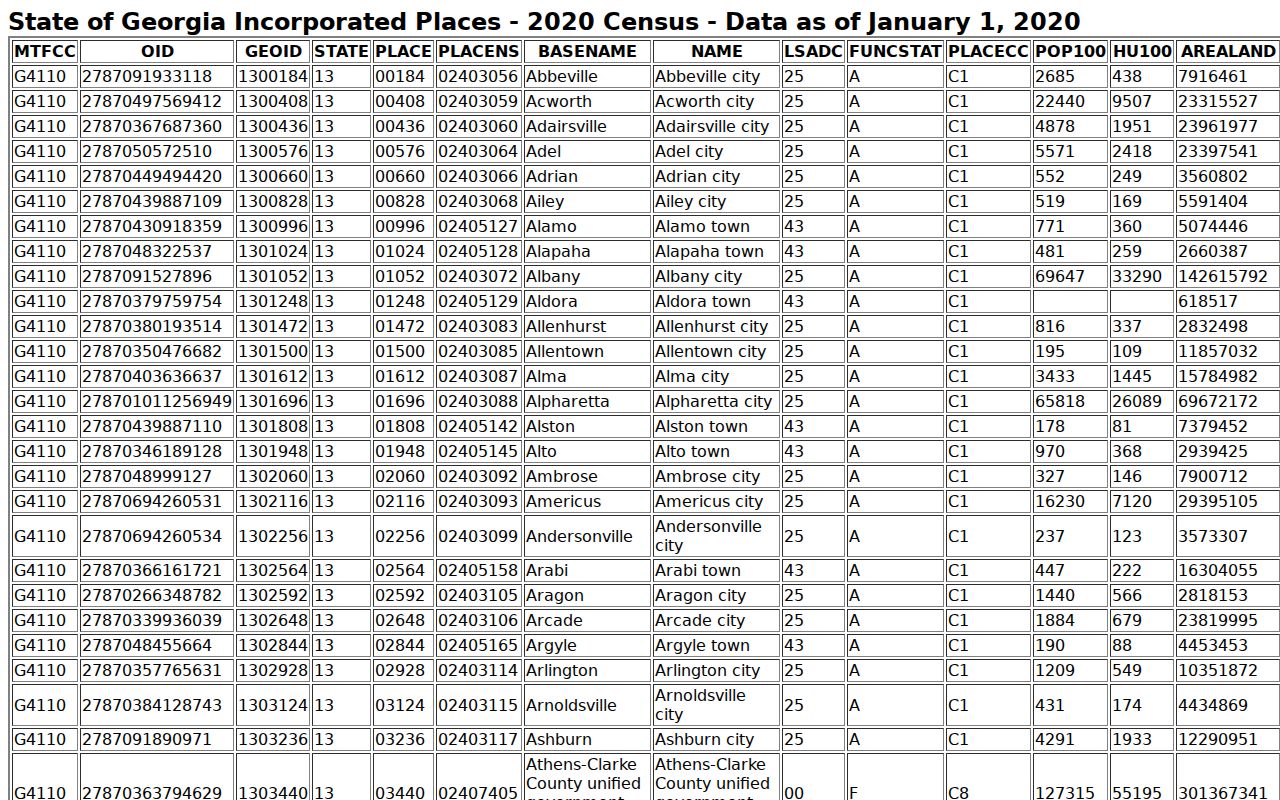
Crisp County has just two incorporated cities. So this guide offers two city pages rather than padding the list with towns that lack their own courts. Cordele, the county seat, counted 10,220 residents in the 2020 Census. Arabi is far smaller, with a 2020 population of 447. Traffic tickets and ordinance violations charged inside city limits go through that city court first. County-level and Superior Court cases travel a separate path entirely. A City Hall, a county courthouse, and a municipal court can stand within blocks of each other. Even so, they keep completely separate dockets.
Cordele Court Records
2020 population 10,220. Cordele Municipal Court uses GovernmentWindow for city citations and has a separate clerk route.
Arabi Court Records
2020 population 447. Arabi Municipal Court uses nCourt citation search; no general public docket index was located.
Check the municipality printed on the citation before anything else. A Cordele ticket belongs with Cordele. Sending it to Arabi's portal or Crisp Probate will only stall things unless the citation itself names that route. County cases work the other way. A reader tracking a county matter needs the full Crisp County docket search, not a city ticket page. The city list on this court docket site comes with population figures. The Census TIGERweb place table is the reference for those numbers.
Crisp County Federal Case Boundaries
Some Crisp cases belong in federal court. A dispute involving a Crisp resident, agency, or event can land there. It may get there even though it started locally. Crisp County sits in the Albany Division of the U.S. District Court for the Middle District of Georgia. The Middle District Bankruptcy court serves the county too. None of those filings live with the Crisp Clerk, and PeachCourt will not find them.
Search PACER with an exact case number or party name instead. Pick the filing court when you know it. Then open the docket report and any linked document. The official Albany page posts the division's court and contact details. Bankruptcy records run through the federal bankruptcy system. That court reaches them by PACER, VCIS, and CM/ECF as it describes.
Fees work differently at the federal level. PACER charges by the page. It caps most case-specific reports. It also waives the bill in any quarter where qualifying charges total $30 or less. Those rules have nothing to do with Crisp County court-record fees. Keep the federal court, division, case type, and source attached to whatever result you pull.
Map and Directions to the Crisp County Courthouse
Superior and Juvenile Court files are kept at the Crisp County Courthouse, 510 North 7th Street, in Cordele, a 1950 modern building designed by Bernard A. Webb. The same building houses the Clerk of Superior and Juvenile Courts, Magistrate Court in Suite 105, and Probate Court in Suite 101, so a visitor should confirm the suite before heading to a counter.
Clerk of Superior and Juvenile Courts
510 North 7th Street
Cordele, GA 31015
229-271-4726
Monday through Friday, 8:30 a.m. to 5:00 p.m.
Probate Court, Suite 101
510 North 7th Street, Suite 101
Cordele, GA 31015
229-271-4731
Monday through Friday, 9:00 a.m. to 5:00 p.m.; payments stop at 4:30 p.m.
The county does not publish a courthouse map with parking, entry-screening, or public-terminal instructions, so call the relevant office before a visit that depends on one. Courtroom livestreams exist for Courtroom 1 and Courtroom 2, but the district's own notice warns that watching a stream is not permission to record or screenshot it.