
How the Crisp County Court Calendar Works
Calendars for the Cordele Judicial Circuit come with a warning: treat them as general guides. The clerk is the one who can verify an exact date and time. Crisp Superior and Juvenile Courts are Cordele Circuit courts. Magistrate, Probate, Cordele Municipal, and Arabi Municipal Courts each run on separate tracks. Note that the county commission calendar covers civic meetings only. It is not a court docket calendar.
An online case docket may list a calendar event. What you can reach, though, depends on the provider and the court. A facilities schedule might show a room held for civil, criminal, juvenile, grand-jury, or accountability-court work. The listing does not name the cases. Summons language on a citation controls until the issuing court says otherwise.
Search a date to find a likely setting. Then check the court, case number, event type, and source date. If attendance or travel hangs on it, call the office that owns the docket. A calendar is a start, never a promise.
Verify Crisp County Circuit Dates
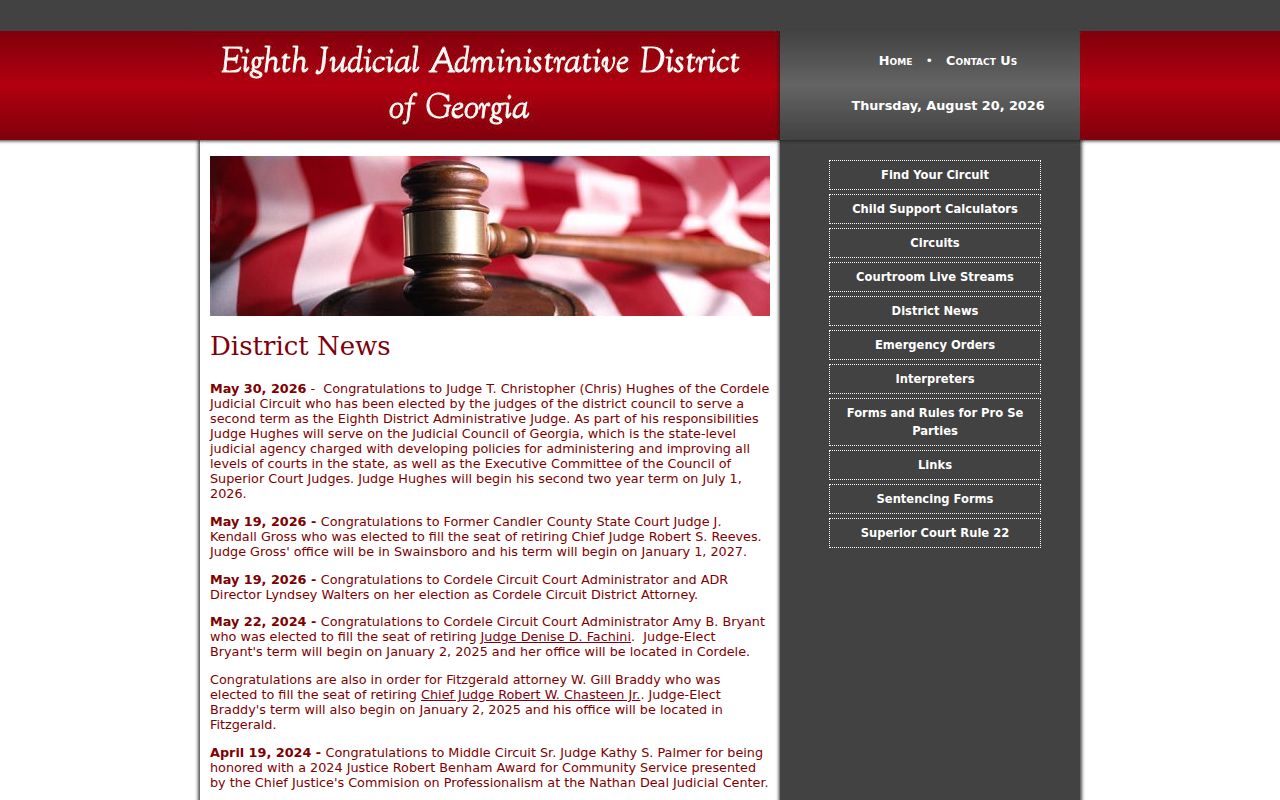
The Cordele Circuit page makes a good first stop for calendar links and judicial information. Its advice to verify dates with the clerk is worth heeding. Settings can change after posting. The circuit covers Ben Hill, Crisp, Dooly, and Wilcox counties. One circuit page reaches far beyond one Crisp case.
The Cordele Judicial Circuit page publishes calendar resources and the instruction to verify dates with the county clerk.
Suppose a circuit page lists a setting. Check it against the newest summons, notice, scheduling order, or docket entry, and write down the date you checked. If sources disagree, ask the clerk which one is current. Do not trust whichever page simply looks newer.
Crisp County Court Date Lookups
A date lookup takes more than a name. Have the case number, court class, county, party role, and expected event ready. For Crisp Superior, the online case route is PeachCourt. Lower courts may still need a call or a counter visit. One caution: Probate Court's ten-day traffic-payment instruction is about posting time, not a hearing date. And a municipal ticket date comes from the citation and summons. It does not come from any payment portal result.
- Read the notice, summons, order, or citation and identify the issuing court.
- Check the Cordele Circuit calendar or the online docket when the matter is a Superior or circuit case.
- Search the exact case or citation number, then compare the event label and court with the paper notice.
- Call the Clerk, Magistrate, Probate, Juvenile, Cordele Municipal, or Arabi Municipal office that owns the docket if no public date is posted.
- Record the source URL or office, the date and time checked, and any later reset, continuance, closure, or order.
A Crisp County docket search can help you locate the case before checking any date. It cannot confirm a future setting that the owning court has not published.
Court Settings: What Each Field Means
Whenever you copy a public calendar or clerk-provided docket sheet, keep each event tied to its source. A room reservation is not a notice. A notice is not a completed docket entry. The field inventory here reflects the settings vocabulary used in Cordele circuit materials.
| Court and county | Names the court class and the county responsible for the setting. |
|---|---|
| Case number and type | Connects the event to the case and distinguishes civil, criminal, juvenile, accountability, or other work. |
| Date and start time | Shows when the setting is planned. It does not prove that the event was held. |
| Room or facility | May show CR1, CR2, JAR, courthouse, law-enforcement center, or another local label. |
| Event label | Can identify arraignment, motion, trial, grand jury, plea, sentencing, status, or administrative work. |
| Judge or officer | Shows the assigned judicial officer when the calendar or docket publishes it. |
| Source and check date | Records where the setting came from and when it was last verified. |
Mark a calendar entry as scheduled, completed, notice, or facility reservation when the source allows. That small label keeps an old room plan from being quoted as proof of a live hearing.
Crisp County Court Facility Labels
Older schedules get easier to read with the April to August 2024 Cordele facilities calendar. It spells out the local shorthand. CR1 and CR2 are courtrooms; JAR is the jury assembly room. CH means courthouse, LEC means law-enforcement center, JC means justice center, and CRB is courtroom B. Event labels include Civil/CS Hear, PAC/CS Hear, Crim Hear, Crim Trials, DP Motions, JUV, Grand Jury, and Acct. Ct.
- CR1 or CR2
- Courtroom 1 or courtroom 2 in the local facility legend.
- JAR
- Jury assembly room.
- Crim Hear or Crim Trials
- Criminal hearing or trial labels in the facilities schedule.
- JUV
- Juvenile event label. Access still follows juvenile rules.
- Acct. Ct.
- Accountability-court label. It does not provide a participant count or case outcome by itself.
Expand any local abbreviation before using it in a public note, and link the source when the label matters. The earlier 2023 facilities calendar shows these labels are historical planning vocabulary. Neither calendar substitutes for a current case calendar.
Reading Crisp County Court Settings
A court setting tells you what the court plans next. It does not show what has already been decided. Arraignment, status conference, motion, jury selection, trial, sentencing, and administrative day each play a different role. When a case carries several entries, lean on the latest date and event label. Keep the earlier ones for context.
In a civil case, a motion setting can come before trial. In a criminal case, an arraignment or pretrial setting decides nothing about guilt. For accountability or PAC/CS work, a facility label may point to program operations. It may not reveal full case detail. If an event's meaning is unclear, ask the clerk.
What if the circuit page, a case docket, and a paper notice disagree? Do not merge them into one date. Note each source, then call the court. A public calendar earns trust only when the court and the date are verified.
When a Court Date Moves
A docket can shift in several ways. A continuance postpones it. A reset gives it a new date. A cancellation wipes one event off the calendar while the case lives on. One closure or emergency order can touch many courtrooms and deadlines together. Treat none of these as a dismissal unless the entered order actually says so.
Crisp County sits in the Cordele Circuit. The circuit has an emergency-order precedent from Hurricane Helene in September 2024. That order covered courthouse closure, suspended deadlines, and reopening instructions. The lesson is practical: an order can overtake any older schedule. So read the order's date and instructions. Confirm with the clerk before trusting any calendar entry.
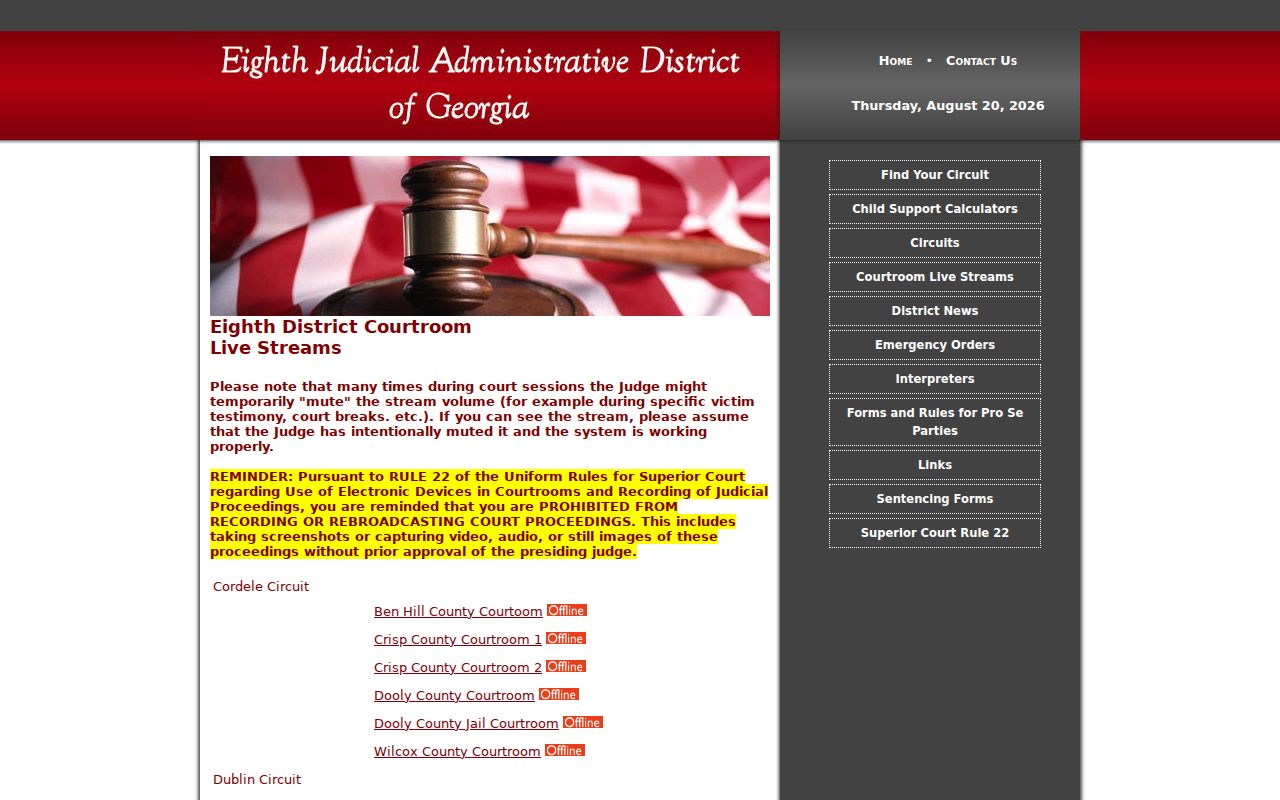
The Eighth District news page is a dated source for circuit changes and administrative notices.
Write down the original setting as well as the change. The Supreme Court amendments page tracks statewide rule and technology changes, and it proves nothing about a local hearing date. If an office gives you a new date by phone, ask how it will show up in the docket or a written notice.
Crisp County Juvenile Court Dates
Crisp Juvenile Court hears matters most days, yet it posts no public daily docket. A parent, party, or authorized requester should call Juvenile Court or the Clerk. Ask about a date. Ask about the basis for access and any release form required. Assume nothing carried over from adult Superior Court search habits; a juvenile calendar works differently.
The published Juvenile Court phone is 229-271-4727. The Clerk's published phone is 229-271-4726. Ask the office which source controls, and whether a child's matter is confidential or restricted.
A youth-record request through the Georgia Department of Juvenile Justice can require a signed release. Guardian steps may also apply. A date question and a document request are separate tasks. Send each one to the office that owns it.
Crisp County Traffic Date Posting
Traffic portals offer search or payment, but a posting delay never moves the court date printed on the citation. Georgia Courts warns that no central traffic-citation database exists. Online posting can take 7 to 21 business days. Crisp Probate says to wait ten days for county or GSP citations. Arabi's nCourt portal says allow five days. These are filing and posting instructions, not hearing continuances.
Payment routes differ by city. Cordele citations run through GovernmentWindow or the municipal clerk. Online payment stops after the court date. That is what Cordele Police says. Arabi citations use nCourt. Once a citation is past its date, call the issuing court. An empty payment portal is not proof that no court matter exists.
The Crisp traffic court records route separates citation posting, court date, payment, and court-record questions.
Missed Settings and What Comes Next
Missed a court date? Call the court or clerk named on the notice right away. A later portal result cannot tell you what happened. The clerk can explain whether a new setting, order, continuance, or failure-to-appear entry hit the docket, though only the court controls the case itself.
Missed-date warning: A calendar gap, payment error, or stream that is offline does not establish that a setting was canceled. Ask the issuing court for the current case status and the next lawful step.
Have the case number, citation number, court, date, and event type in hand. For a Superior case, the Clerk can point you to the docket or the order. Magistrate, Probate, Juvenile, Cordele Municipal, and Arabi Municipal matters differ. Each goes to that office directly. A federal setting belongs to the federal court or the PACER route.
Write down the answer. Note the office, the call date, and any written instruction. A schedule helps you locate the setting. The owning court still decides what comes next.