Crisp County Court Record Requests
Superior civil and criminal records start with PeachCourt, if an account works for you. The Georgia Courts e-access directory lists Crisp Superior with that provider. The e-file directory lists PeachCourt as mandatory for filing. Certified copies, restricted items, missing files, and older records go to the Clerk of Superior and Juvenile Courts instead. Each other record type takes its own route. Magistrate, Probate, Juvenile, Cordele Municipal, Arabi Municipal, federal, and agency records are all separate.
Requests can go online when the record is available. The clerk's counter works too. Phone fits for routing questions. Mail works as well, at a published P.O. Box. A written request under the Georgia Open Records Act fits when the named custodian holds the record. The clerk posts no local mail-in docket form, public terminal, or clerk-assisted search fee. Turnaround times are not published. Ask the office before you send a payment or an envelope.
- Identify the court and custodian: Superior Clerk, Magistrate, Probate, Juvenile, Cordele Municipal, Arabi Municipal, federal court, Sheriff, or another agency.
- Give the case or citation number, record type, filing or entry date range, and the minimum party detail needed to distinguish the file.
- State whether an ordinary public copy, redacted copy, certified copy, exemplified copy, transcript, or docket sheet is needed.
- Ask for the current fee, payment method, delivery option, and expected turnaround. If a portion is withheld, ask for the legal basis and non-exempt portion.
- Keep the request date, custodian, response, source URL, and any rule or exemption cited.
A Crisp County docket search can locate the case first. The clerk or court still provides the official copy.
Crisp County Clerk Records Desk
The Clerk of Superior and Juvenile Courts handles criminal and civil filings, juvenile matters, real and personal-property filings, jury administration, liens, trade names, military discharges, and related records. Tara Hayslip is listed as clerk. For a secondary contact reference, the official county directory PDF lists office details, though the current clerk page controls. The office is the central local route for Superior docket and document questions. It does not own every record in Crisp County.
Published contacts are 510 7th Street North, Cordele, Georgia 31015; P.O. Box 747, Cordele, Georgia 31015; and 229-271-4726. Weekday hours run 8:30 a.m. to 5 p.m. Passport processing ends earlier. Ask whether your item sits in the Superior file, the Juvenile file, a separate property record, or another custodian's system.
Clerk of Superior and Juvenile Courts
510 7th Street North, Cordele, GA 31015
P.O. Box 747, Cordele, GA 31015
229-271-4726
8:30 a.m. to 5 p.m., Monday through Friday
Say "certified," "exemplified," or "ordinary" at the start of your request. A clerk-certified copy, a public provider image, and an authenticated electronic document are different products.
Kinds of Court Records
Custody follows the court and the product. A Superior pleading and a Probate order may both be public. They are never in one file. A traffic payment record is not a complete municipal docket. A transcript is a word-for-word product. The table keeps the first route tied to the record itself.
| Record | Likely custodian or route | Access note |
|---|---|---|
| Superior docket, pleading, motion, order, or judgment | Clerk of Superior and Juvenile Courts or PeachCourt | Account and document availability vary; Rule 21 and Rule 21.6 can limit access. |
| Juvenile docket or document | Juvenile Court and Clerk | No public online juvenile docket was located; authorization and confidentiality control. |
| Magistrate warrant, civil, or dispossessory file | Magistrate Court | No public portal was located; ask about index and copy procedure. |
| Estate, guardianship, or Probate order | Probate Court | Probate records are separate from Superior; some material needs authority. |
| City traffic or ordinance record | Cordele or Arabi Municipal Court | Use the issuing city’s portal or clerk; payment is not a full docket. |
| Federal or bankruptcy record | PACER and the Middle District of Georgia | Federal records are not county clerk records. |
Ask the court that owns the record before sending a request to the county's general office. That one step saves time. It keeps a police report, DDS report, court file, and docket entry from being treated as the same product.
Docket Versus Document File
A docket is a chronological register of activity. The document file holds the pleadings, exhibits, motions, orders, judgments, and other papers behind those entries. A docket can show that a motion was filed or an order entered. This holds even when the public image lags behind. The image may also be redacted, sealed, or excluded from the provider view.
| Docket entry | One recorded event, filing, setting, order, or disposition in time order. |
|---|---|
| Filed document | The pleading, motion, exhibit, notice, order, judgment, or other paper connected to an entry. |
| Public copy | A version available after access rules and redaction of protected information. |
| Certified copy | A custodian-authenticated copy for an official use; an ordinary download is not automatically certified. |
| Transcript | A word-for-word record prepared by a court reporter or authorized provider, separate from a docket or livestream. |
Name the exact layer you need when requesting a record. "Public docket sheet," "entered judgment," "public motion," "certified order," and "transcript" point the clerk to different products, and each may carry different fees.
Public Documents in PeachCourt
PeachCourt's public document-access help lists document categories. They may include affidavits, agreements, answers, briefs, certificates, complaints, decrees, depositions, dismissals, exhibits, motions, notices, orders, petitions, transcripts, and verifications. Treat that list as a provider-wide availability guide. It does not promise that a Crisp file contains every category. It also does not promise that each category downloads without an account or charge.
The same help material identifies sealed documents and adoption documents. Unexecuted proposed orders and other restricted categories appear there too. A document link can be missing for many reasons. The item may be sealed, excluded, not imaged, outside the available history, or closed to the public. Ask the Clerk when the missing paper matters.
A public document can also carry a protected identifier that must be redacted. Rule 21.6 and the Georgia public-record guidance point one way. Ask for the redacted public version, not the unredacted field. Ask for the basis for any withholding too.
Copy Fees and Certification
Fees turn on the product, page count, assistance, certification, service, and provider. The Georgia Superior Court Clerks' Association cost schedule took effect July 1, 2024. Use it as a benchmark. It is not a Crisp County quote. The local total and a provider transaction can differ.
| State schedule benchmark | Amount or rule | Use with care |
|---|---|---|
| General Superior civil filing | $218 before case-specific service or other charges | Not a guaranteed Crisp receipt total for every filing. |
| Uncertified copy without assistance | Generally 50 cents per page | Confirm the local product, page count, and any computer or fax charge. |
| Uncertified copy with assistance | Generally $1 per page | Ask what assistance or search work is included. |
| Certified or exemplified copy | $2.50 first page and 50 cents for added pages in the listed benchmark | Confirm certification type, seal, authentication, and local total. |
GSCCCA eCertification offers a digital certification workflow with account, county selection, document type, payment, and authentication steps. Whether Crisp takes part is a question for the Clerk. Ask whether eCertification works for your document, or whether an office copy is required.
Crisp County eCertification Records
Wondering whether you can order a certified Crisp County document online? The GSCCCA eCertification portal lets registered users in participating counties request a digital certified copy. Users wait while the clerk processes it and finish with payment or authentication. Crisp County's participation is another question. A portal existing statewide does not mean every Crisp filing can be ordered through it.
So go straight to the source. Call the Clerk of Court. Ask whether your certified copy must be picked up at the office, ordered through eCertification, or handled some other way. Have the case number ready. Also bring the document title, its entry date, the court, and why you need a certified or exemplified version. The clerk can quote the current fee and explain sealing, authentication, and turnaround time.
One caution worth knowing. A document image you download from PeachCourt is handy for reading the file. It is not a clerk-certified copy on its own. A receiving agency or court may treat an authenticated electronic document differently from a paper certified copy. So match the format to what the receiving office requires.
Crisp County Court Record Access Rules
The Georgia Open Records Act sets the public-record baseline. Yet court files answer to more than that one law. Court-specific statutes also shape what a Crisp County clerk can release. So do Uniform Superior Court Rules, protective orders, juvenile rules, and provider permissions. Rule 21 starts from open access to Superior Court files. Law or procedure can limit that access. Rule 21.6 protects certain identifiers inside filings. And no sealed order becomes public just because someone labels the demand an open-records request.
Important authorities:
O.C.G.A. §§50-18-70 through 50-18-75 describe Georgia’s Open Records Act and public-custodian framework. The official Act PDF supplies the text.
O.C.G.A. §50-18-71(d) guidance covers response practice, exemptions, costs, redaction, and partial release.
Uniform Superior Court Rule 21 gives the Superior court-file access rule and limits on access orders.
Rule 21.6 and O.C.G.A. §9-11-7.1 address protected identifiers and redacted copies.
When a custodian withholds part of a Crisp County court file, ask two things. Which exemption or rule applies? Can the non-exempt portion still be produced? For juvenile, adoption, sealed, or restricted documents, ask what authorization or court procedure governs access. Staff cannot reveal sealed content. So do not press them to try.
Crisp County Record Requests
A focused request travels faster than a demand for a person's complete file. Name the court. Give the case number, the date range, the document type, and whether you want public or redacted copies. State the delivery format and whether certification is needed. Putting it in writing helps too. It pins down the date and the custodian who received the request.
Here is wording that works: "Please provide the public docket sheet and public or redacted copies of the named record in Crisp County for the case number and filing or entry date range listed below. If any portion is withheld, please identify the statutory or rule basis. Please produce the non-exempt portion. Please advise the current copy, certification, and delivery options." Fill in the actual court, case number, record type, and dates before sending.
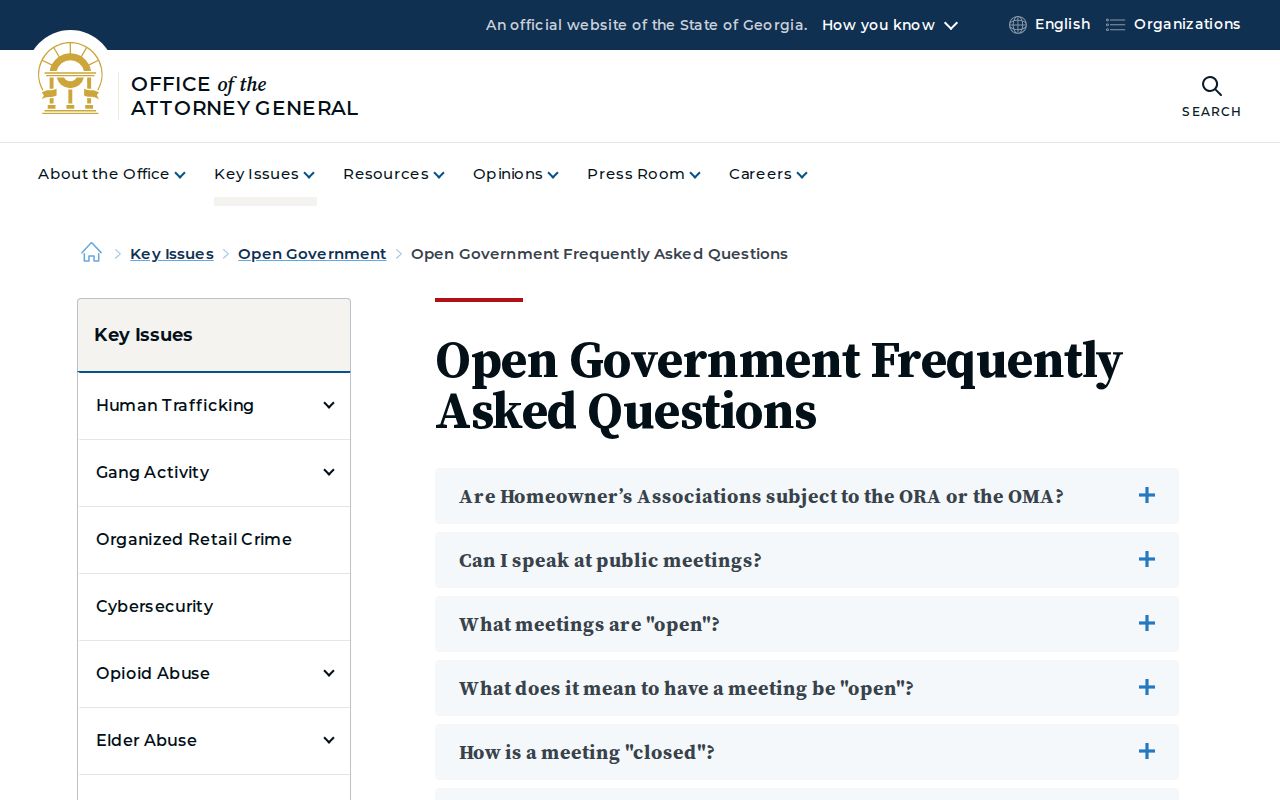
The Georgia Attorney General request form offers a useful model. It covers fields like agency, description, requester, address, phone, email, and delivery. It is not a Crisp submission address. Send your request to the actual clerk. That could be a court, city, Sheriff, Probate office, or other custodian holding the record.
The Georgia Attorney General Open Records FAQ explains response, cost, exemption, and redaction concepts.
Crisp County Federal Court Records
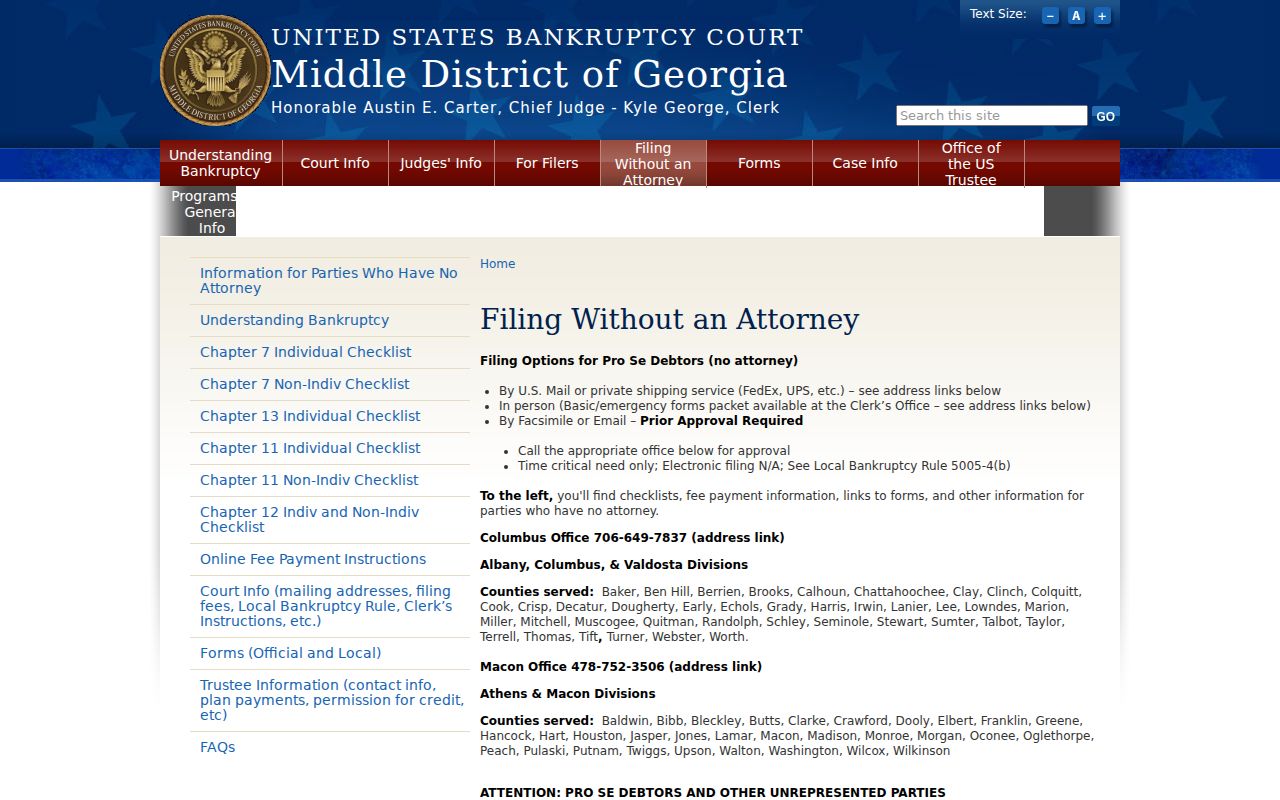
Federal civil, criminal, and bankruptcy filings are not Crisp County court records. Crisp sits in the Albany Division of the Middle District of Georgia. The Middle District Bankruptcy Court counts Crisp among the counties it serves. So search those matters in PACER, VCIS, or the bankruptcy court's CM/ECF route, and confirm the filing court and division before relying on anything.
A federal docket can show a case number, the court and division, the filing date, parties, judge, attorney, docket entries, document numbers, sealed-entry markers, judgment, appeal, and access charges. Still, a federal docket report or document link cannot replace a certified Crisp Superior copy. The county clerk has no power to certify a federal filing.
The Middle District Bankruptcy Court pro se page confirms a separate federal filing and access route.